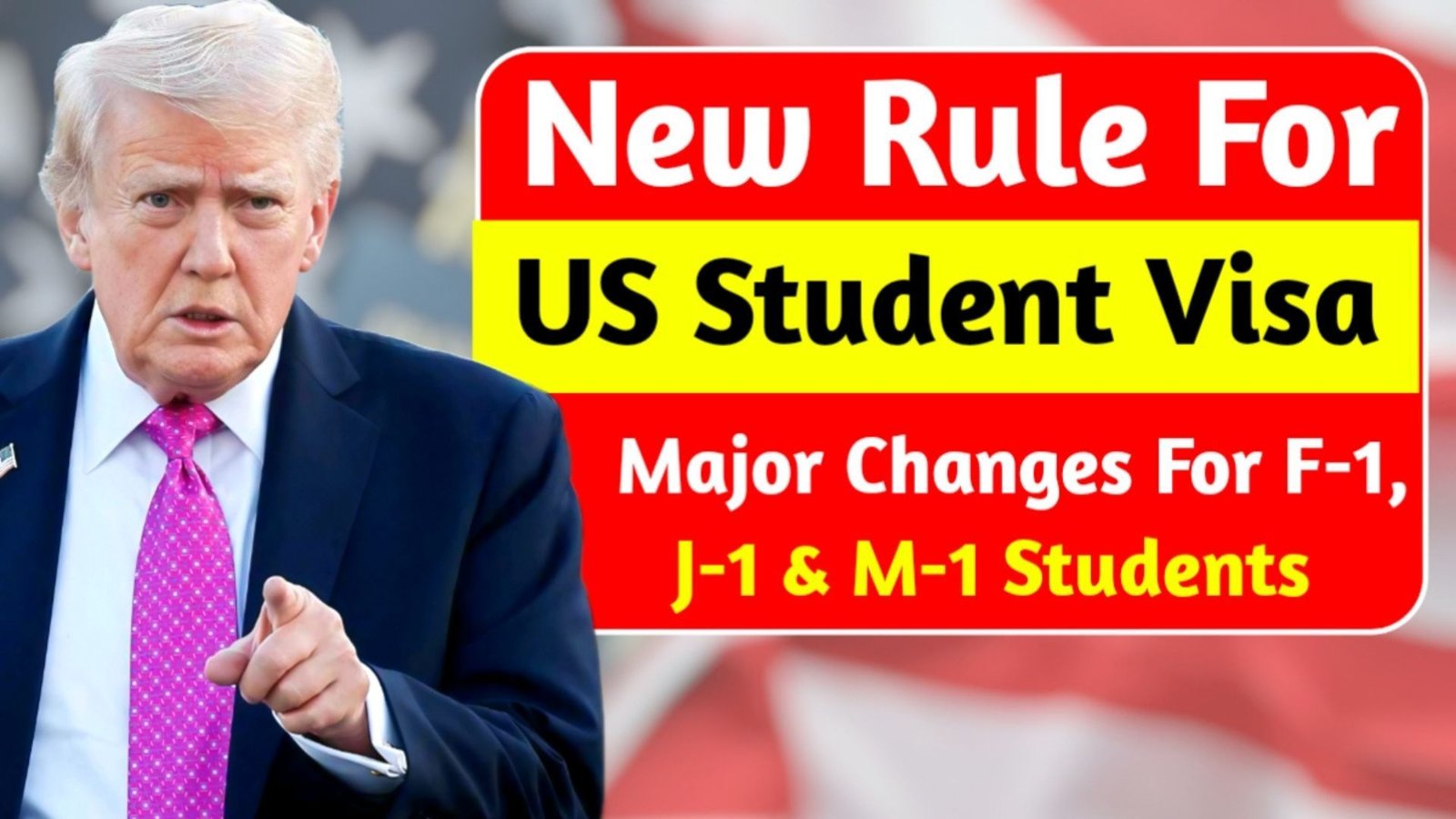
Imagine packing your bags for an American dream education, only to hit a wall of red tape that caps your stay at four years flat—welcome to the new reality under President Trump’s immigration push. As of December 3, 2025, the Department of Homeland Security (DHS) has advanced a proposed rule first floated in August, shaking up new US student visa rules 2025 for F-1 academic seekers, J-1 exchange visitors, and M-1 vocational trainees. Aimed at curbing “visa abuse” and bolstering security, these Trump F-1 visa changes replace flexible “duration of status” with strict time limits, forcing more frequent vetting and extensions. For international students from India, China, or beyond, this means rushed planning, potential program disruptions, and a scramble for alternatives like Canadian schools. Here’s your roadmap to decode the J-1 visa policy updates and beyond.
What Are the New US Student Visa Rules?
This overhaul, dubbed a “common-sense fix” by Trump, targets perceived loopholes in nonimmigrant student programs that have let some stay indefinitely. The core shift? Ditching open-ended stays for fixed periods up to four years, tied to program length but no longer. Extensions now require USCIS approval with deeper background checks, while grace periods post-graduation shrink from 60 to 30 days—pressuring quick jumps to work visas like OPT. Travel bans from 12-19 countries (Iran, Yemen, Afghanistan) add hurdles, potentially blocking entries even with approvals. Critics slam it for risking $7 billion in lost tuition revenue and 60,000 jobs, per NAFSA estimates. Yet proponents argue it protects U.S. workers from “cheap labor” via misused OPT/CPT.
Who Is Affected by Trump’s Visa Overhaul?
These M-1 student visa reforms hit hardest those in longer programs, like PhDs or multi-year trades, forcing mid-stream exits or costly reapplications. Current holders aren’t grandfathered—expect audits if your stay exceeds the cap. Nationals from restricted countries face outright denials, while all applicants need spotless records and sponsor buy-in. Universities, especially mid-tier publics, brace for enrollment drops as students pivot to Europe or Australia. Over 1 million F-1/J-1/M-1 visas issued yearly could see a 50% dip from key markets like India.
Basic Eligibility Shifts
Under Trump student visa overhaul: Valid passport from non-banned nation. SSN/ITIN equivalent via SEVIS registration. No prior overstays or security flags.
Key Caps by Visa Type
| Visa Type | Max Stay Limit | Grace Period Post-Program |
|---|---|---|
| F-1 (Academic) | 4 years max | 30 days |
| J-1 (Exchange) | Up to 4 years | 30 days |
| M-1 (Vocational) | 4 years max | 30 days |
Auto-Impacted Groups
PhD candidates in STEM—extensions now scrutinized. Au pairs/scholars on J-1—sponsors must report addresses in 10 days. Vocational trainees (culinary/tech)—shorter approvals for hands-on focus.
When Do These Changes Take Effect?
The proposal hit the Federal Register in August 2025, with comments closed by September—final rule eyed for Q1 2026, but interim enforcement ramps up now. New applicants face caps immediately upon approval; existing students get phased notices by March 2026. Visa interviews resume but with social media vetting mandatory since June. Denials appealable in 30 days via USCIS—act fast as backlogs grow.
Steps to Navigate the New Rules
Consult NAFSA.org or an immigration attorney pronto—premium processing ($2,805) speeds extensions. Update SEVIS via your school; beef up apps with ties to home country. Explore backups: Canada’s IEC or UK’s Graduate Route. Document everything—overstays now trigger instant revocations. Track via DHS.gov; ignore scam “fast-track” services.
Why These Changes Are Shaking Up Campuses
Beyond security, this squeezes America’s talent pipeline—international students pump $40 billion yearly into the economy. Shorter stays mean rushed graduations, lost research collaborations, and hollowed-out dorms. For students, it’s stress: Halved grace periods spike anxiety over OPT/H-1B lotteries. Echoing 2017’s travel ban, it prioritizes borders over brains, but sparks innovation—think hybrid U.S.-abroad programs.
FAQs – Trump Student Visa Changes 2025
- Are new US student visa rules 2025 final yet? Proposed—expect enforcement by spring 2026, but prep now.
- How do Trump F-1 visa changes impact PhD students? Four-year cap forces extensions; justify with program needs.
- What’s new for J-1 visa policy updates? Fixed timelines, sponsor reporting—au pairs hit hardest.
- Do M-1 student visa reforms shorten vocational programs? Yes—align to four years, with tighter OPT-like transitions.
- Can I appeal under Trump student visa overhaul? Yes, 30 days via USCIS—legal aid boosts odds.
Conclusion
Trump’s US visa changes December 2025 signal a tougher road for dream-chasing students, capping freedoms to tighten controls. Yet amid the flux, smart prep turns barriers into bridges—update your status, scout options, and stay vigilant on DHS feeds. This isn’t the end of America’s allure; it’s a call to adapt. International trailblazers, your resilience will redefine borders—start charting your path today.